-
Vibrant Health Academy | Module 1
-
- Quiz
-
- Quiz
-
- Quiz
-
- Quiz
-
- Quiz
-
- Quiz
-
- Quiz
-
- Quiz
-
- Quiz
-
- Quiz
-
- Quiz
-
- Quiz
-
- Quiz
-
- Quiz
-
- Quiz
-
- Quiz
-
- Quiz
-
- Quiz
-
- Quiz
-
- Quiz
-
- Quiz
-
- Quiz
-
- Quiz
-
- Quiz
-
- Quiz
-
- Quiz
-
- Quiz
-
- Quiz
-
- Quiz
Day 16: Tonic Vibration Reflex: The Involuntary Contraction of Skeletal Muscle
Article Title: Tonic Vibration Reflex: The Involuntary Contraction of Skeletal Muscle
Topic: The Mechanics of Vibration (Part 16 of 180)
In the conventional understanding of physical fitness, movement is viewed as an act of will. When you decide to lift a grocery bag or climb a flight of stairs, your brain initiates a "voluntary" command. This command travels through the motor cortex, down the spinal cord, and out to the specific muscle groups required for the task. However, the human body possesses a parallel system of movement that operates entirely outside of conscious control. This system is governed by reflexes. In the context of Whole-Body Vibration (WBV), the most critical physiological phenomenon is the Tonic Vibration Reflex (TVR).
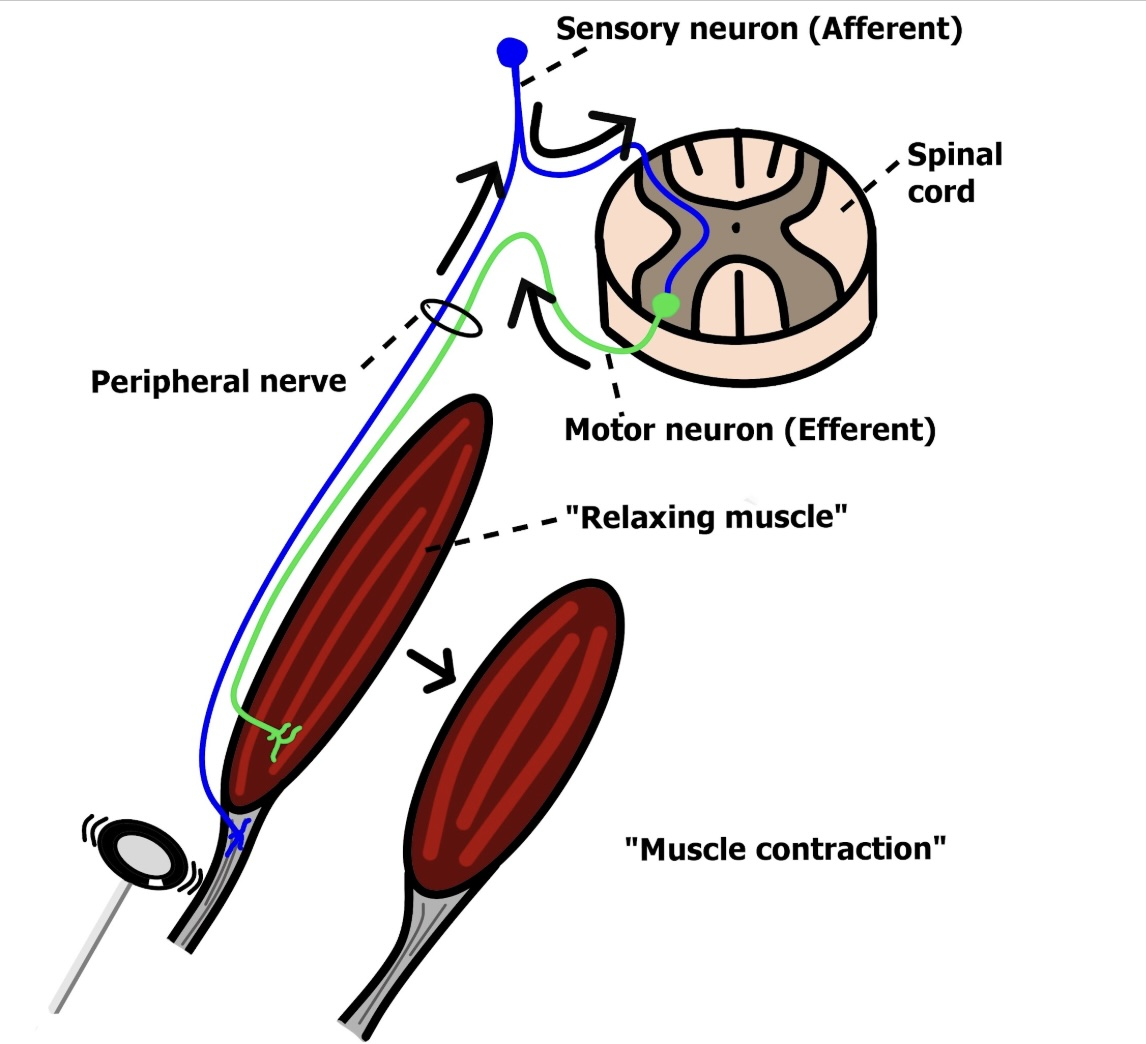
To understand TVR, one must first understand the "sensory equipment" embedded within your muscles. Every skeletal muscle in your body contains thousands of microscopic sensory organs known as muscle spindles. These spindles are essentially high-precision "stretch receptors." Their primary job is to monitor the length of the muscle and the speed at which that muscle is being stretched. This is a survival mechanism: if a muscle is stretched too far or too fast (for example, if you trip and your ankle begins to roll), the muscle spindles immediately signal the spinal cord to contract the muscle to prevent a tear. This happens in milliseconds—long before your conscious brain even realizes you have tripped.
When you stand on a vibration plate, you are essentially "hacking" this survival mechanism. As the platform oscillates vertically, it creates a rapid, repetitive displacement of the body. Even though the movement is only a few millimeters in height, it happens with incredible speed. For instance, if the plate is set to 30 Hz (Hertz), it moves up and down 30 times every second. Each time the plate moves down, the muscles in your legs and core are momentarily stretched. The muscle spindles perceive this as a "threat" to the joint’s stability and trigger an involuntary contraction to counteract the stretch.
Because the vibration is continuous, these contractions do not stop. This is why the reflex is termed "Tonic." In medical terminology, a "phasic" reflex is a quick, one-time twitch (like the doctor tapping your knee with a rubber mallet), whereas a "tonic" reflex is a sustained, ongoing state of muscle activation.
The clinical significance of the Tonic Vibration Reflex cannot be overstated, particularly for the senior population. In traditional resistance training, the amount of muscle fiber "recruitment"—the number of fibers actually working—is limited by the user’s conscious effort and the health of their joints. Most people only utilize 40% to 60% of their available muscle fibers during a standard walk or a light weightlifting session. Because the TVR is an involuntary reflex triggered 30 to 50 times per second, it bypasses the "lazy" conscious brain and forces nearly 100% of the muscle fibers in the targeted area to engage.
This high-level recruitment occurs without the need for heavy external weights. In a standard gym environment, to get 100% fiber recruitment in the legs, a person would typically need to perform a maximum-effort heavy squat. For a 75-year-old, the structural risk to the lower back and knees from such a lift would be immense. WBV provides the same—and often higher—level of fiber activation through the TVR, while the user simply stands in a neutral, safe position.
Furthermore, the TVR helps to "wake up" what clinicians call dormant motor units. As we age, the nerves that control our muscles can become less active if they aren't used frequently. The rapid-fire stimulation of the vibration plate acts like a "neurological wake-up call," ensuring that the connections between your nerves and your muscles remain sharp and responsive.
By engaging in this 10-minute protocol, you are not "working out" in the traditional sense; you are subjecting your musculoskeletal system to a sophisticated series of reflex-driven contractions. This ensures that your muscles stay strong and your reflexes stay fast, providing a robust "biological shield" against the frailty often associated with aging. Understanding the TVR allows you to appreciate that even when you feel like you are "just standing there," your body is performing an intensive, high-level structural maintenance routine at the cellular level.
There are no comments for now.